Rohan Gupta
(he/him)
PhD Student in Astronomy
My Research
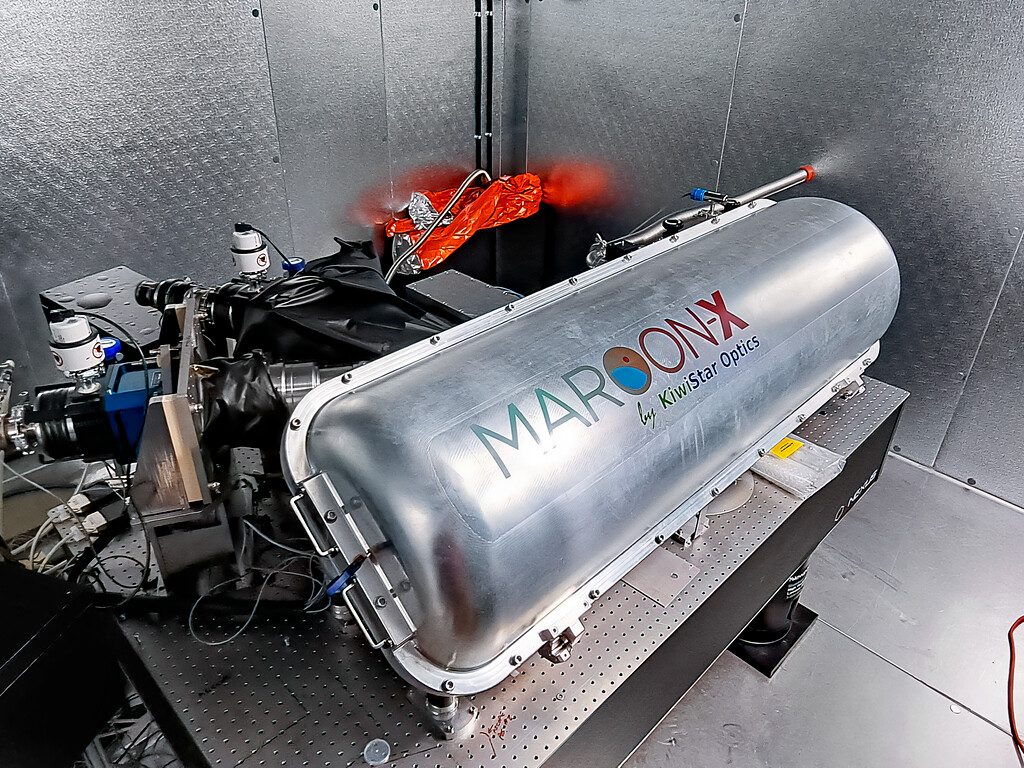
I’m a first year graduate student at the University of Michigan, working with Professor John Monnier. I’m interested in both observational astronomy and instrumentation, with a goal of both designing and using cutting-edge instruments to push astronomical discovery. I also have a strong background in computer science and machine learning, having completed both a Bachelor’s and Master’s degree in Computer Science prior to starting my PhD. My current work focuses on developing novel techniques to reconstruct images from interferometric data in optical/infrared astronomy. I aim to study the environments around young stellar objects and understand the processes of star and planet formation using these techniques. Before starting my PhD, I worked with Professor Jacob Bean at the University of Chicago on improving the stability and precision of MAROON-X, a high-resolution spectrograph for exoplanet detection.
Interests
Education
PhD Astronomy
 University of Michigan
Advisor: Professor John Monnier
Research focus on interferometric image reconstruction and instrumentation for optical/infrared astronomy.
MS Computer Science
 University of ChicagoSpecialized in machine learning and high performance computing.
BS Astronomy, Computer Science, BA Physics
University of Chicago
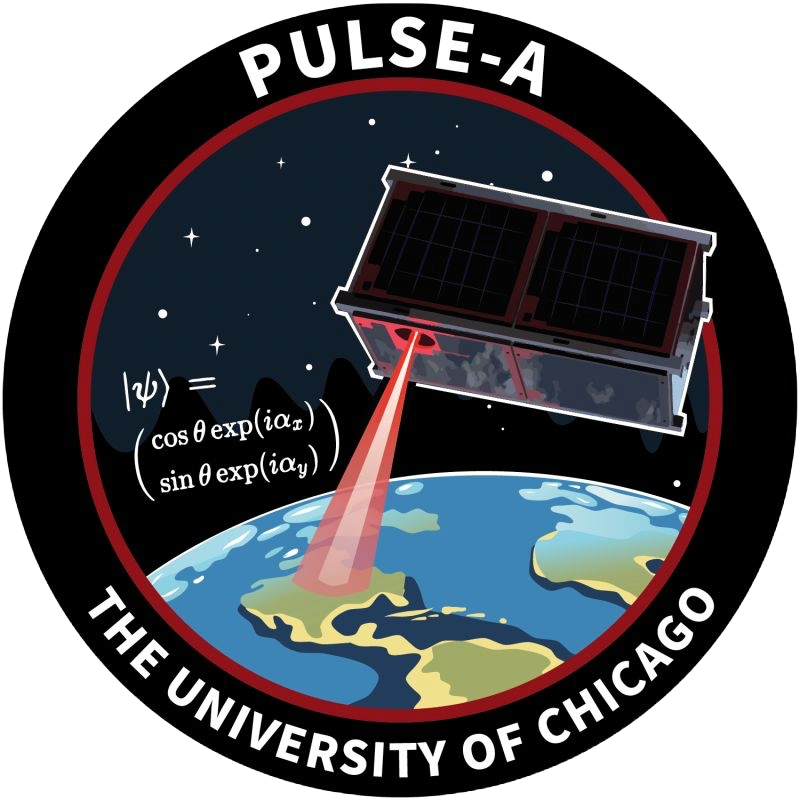
I was a co-founder of the PULSE-A mission during my undergraduate studies at the University of Chicago. PULSE-A (Polarization-based Laser Satellite Experiment-A) is a 3U CubeSat designed to demonstrate polarization-based free-space optical communication between low-Earth orbit and a ground station. Developed by an undergraduate-led team, the mission aims to improve the affordability and accessibility of space-to-ground optical communications, which offer higher data rates and enhanced security relative to traditional radio-frequency systems.
PULSE-A also serves as a risk-reduction mission for a planned follow-up mission, PULSE-Q, which will demonstrate space-based quantum key distribution. I contributed to early mission concept development and co-authored multiple successful grant proposals, securing a launch opportunity through NASA’s CubeSat Launch Initiative and $70,000 in confirmed funding. I also co-authored a $1M NSF proposal supporting PULSE-Q that has been selected as a finalist and is currently under review. To date, this work has resulted in two conference publications.